We have a lot of problems plaguing our societies, and the way our corporations are structured, I believe, is one of them. It’s certainly easy to look at many corporations and think that the very idea is a bad one. It is also easy to look at them as some neutral vessel—a pattern humans find useful for organizing and accomplishing that which they cannot do alone and as such a tool for wealth creation. But whether we are going to abolish something so important, transform it, or allow it to remain as it is, we should at least understand what it really is—not what people today believe it to be, and not some idealized form of what they hope it to be. We cannot understand what the corporation really is without first understanding its history.
For most of my life I, like most people, assumed that concepts like “money” and “shares” were timeless, almost natural phenomena that exist outside of us, rather than tools that emerged at very specific times as a result of very specific pressures—and never as the result of some benevolent central plan.
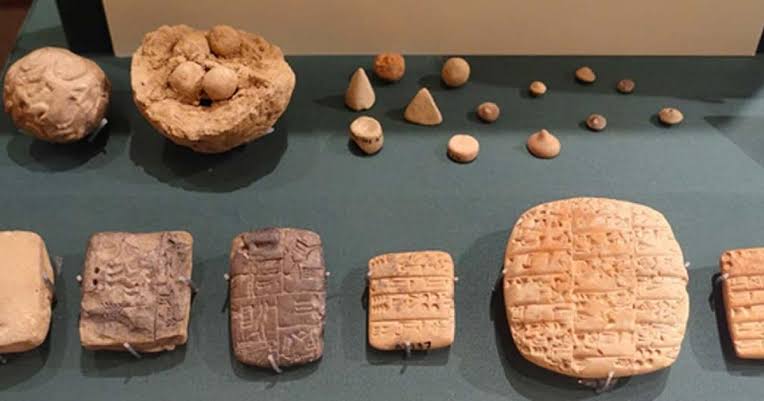
For roughly 250,000 years of human history, the very concept of money, let alone shares, did not exist. Money only emerged around 3000 BCE in Mesopotamia when humanity first began generating surpluses through agriculture. Temple administrators needed a way to standardize the different resources they housed and the taxes they were owed, so they created the shekel and set standardized values in shekels for different goods. For the next 4,500 years, that was basically the only kind of money that existed: sovereign currency designed to track and tax domestic surpluses. This is uncontroversial within archaeology, yet absolute heresy within mainstream economics, which assumes that money emerged spontaneously at some unknown point when neighbors got tired of bartering with each other.
Just as sovereign currency emerged to manage the technological disruption of agriculture, corporate shares emerged to manage the technological disruption of oceanic trade and warfare. In the 1500s and 1600s, deep-water navigation made it possible to send hundreds of armed men halfway across the world to capture other people’s surpluses. Traditional state currencies were just an accounting system for a ruler’s domestic economy; they didn’t have a mechanism to fund massive, high-risk, multi-year oceanic expeditions to extract foreign resources—especially when European monarchs were already broke from constant war.
The corporation emerged as a way to fund that extraction and expressly to eliminate free-market competition. In the late 1500s, independent British and Dutch ships would show up at the same Asian ports, bid up the price of spices locally, and then flood the markets back in Europe, crashing their own profits. So in 1602, the Dutch government created the first modern corporation by forcing rival merchant groups to merge into a single state-backed military monopoly: the VOC (Dutch East India Company). It was this company, and not the Dutch state itself, that was able to take control of all trade between Europe and Asia.
Originally, merchant voyages had an expiration date. A ship was funded, it would go off to buy some spices, come back, sell the spices, distribute the profits, and that was the end of the transaction. But the VOC was intended to last for much longer than usual—10 years, to be specific—the amount of time the VOC would need to build forts in Asia to fight the Portuguese. That’s why the VOC’s 1602 charter locked investors’ money in for 10 years. Of course, people don’t like having their money locked up for that long, so to entice the investment, the charter granted investors the right to sell their receipt—their “share”—to someone else in Amsterdam.
But that’s not the end. It turns out they didn’t really think it through, because what was the VOC going to do when the 10-year period was over? Sell their Asian fortresses and cannons to pay back their investors? The VOC was a victim of its own success. It had secured the trade routes between Asia and Europe from the Portuguese and British thanks to its fortresses and cannons ... which it now had to sell to pay back its investors? Who would they even sell to? The British? The Portuguese? Regardless, the Dutch monopoly on trade with Asia would be over. No thank you! With the support of the Dutch state, they came up with an innovative solution that would become the final key feature of the modern corporation: not paying back their investors. Investors were told their capital was now locked in forever, and if they wanted cash, they had to sell their shares on the open market.
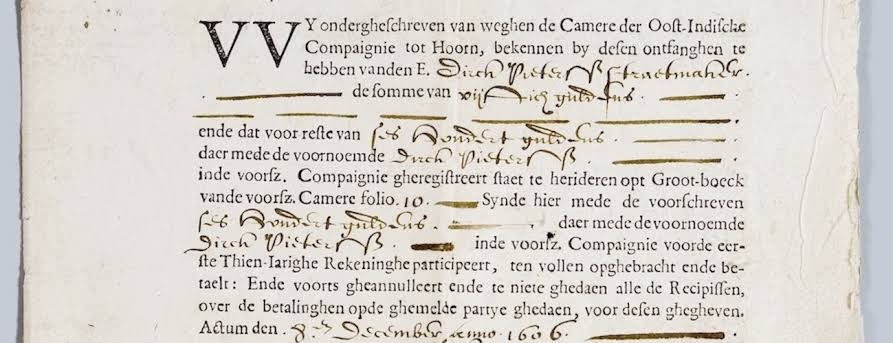
That is the true origin story of a new template for private money that would be replicated countless times and develop into a macro-phenomenon we now refer to as “the stock market.” Unlike the King’s currency, which would sit stagnant in a chest waiting to buy and sell goods, a share gave you a liquid ownership interest in a state-protected monopoly that compounded your wealth over time—and could even be used as collateral for loans. Suddenly, for the price of a share, the already-wealthy could buy a permanent cut of the extracted surpluses of some unfortunate civilization filled with people they’d never met.
So what can we do with this knowledge? Is it possible to improve on this design? What are the modern pressures being exerted on these organizations? Will they transform them for the better or for the worse? Is there anything we can do to guide this process in a healthier direction for humanity?